Does Schema Help with (AI) SEO?
One of the questions I keep hearing at the moment is whether Schema Markup can boost AI visibility, improve AI citations, or help pages show up in AI answers. I understand why people are asking it. There is a lot of noise around AI search at the moment, and schema often gets presented as if it is some kind of shortcut.
My view is more grounded than that. Schema absolutely still matters in SEO. I would not remove it from the conversation and I definitely would not call it pointless. But I also do not think it should be sold as a magic AI tactic. In my experience, the strongest pages in AI search are not winning because they added markup alone. They are winning because the overall SEO is strong: the page is crawlable, indexable, useful, well-structured, internally linked, topically relevant, and strong enough to deserve search visibility.
So this article is not a hype piece. It is a practical, myth-busting explanation of what schema does, what it does not do, what the latest evidence says, and how I think schema should actually be treated inside an AI-search strategy. If you are trying to separate fact from noise, that is the right way to approach it.
My Quick Take
Schema can help with AI SEO, but not in the simplistic way many people claim. It supports structured understanding, entity clarity and traditional SEO fundamentals, but current evidence does not show that adding schema alone will reliably increase AI citations. The best current view is that schema helps support strong SEO, and strong SEO supports better AI search performance.
Key Takeaways
- Google says there is no special AI-only schema or markup needed for AI features.
- The current evidence does not show that adding JSON-LD alone creates a major uplift in AI citations.
- Schema still helps traditional SEO by supporting search understanding, richer search appearances and cleaner technical foundations.
- I would treat schema as supportive infrastructure, not as an AI shortcut.
- At eCBD, our position is simple: strong overall SEO is what translates into stronger AI-search performance.
What Is Schema Markup?
Schema Markup is a form of structured data that helps search engines understand what a page is about and how the information on it is organised. It gives the search engine clearer context about things like articles, products, organisations, people, breadcrumbs and other content types.
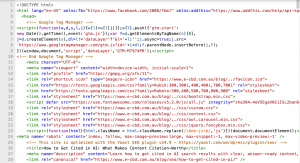
Most of the time, when SEOs talk about schema implementation, they are talking about JSON-LD. That is simply one of the most common ways of adding structured data to a page. It sits in the code and helps describe the page in a machine-readable way.
In practical terms, schema helps with interpretation. It can clarify entities, page roles, entity relationships and page meaning. That is why it has long been tied to richer search appearances, better search understanding and cleaner technical SEO.
Does Schema Help with AI SEO?
Yes, but indirectly — and that distinction matters.
In my opinion, schema helps with AI SEO in the same way a lot of good technical SEO helps with AI SEO: it supports search understanding. It can make the page easier to interpret, reinforce entity relationships, reduce ambiguity and help align the visible content with a cleaner machine-readable layer.
What I do not think is reasonable is claiming that schema is a direct AI citation lever. Google has already said there are no additional technical requirements to appear in AI Overviews or AI Mode, and that the same foundational SEO best practices still apply. So I would frame schema as supportive infrastructure, not as an AI ranking hack.
That means schema belongs in the stack, but it should sit alongside stronger content, clear page structure, crawlability, indexing, internal linking, topical depth and trust signals — not instead of them.
What the Latest Evidence Says
The most useful recent data point comes from a new Ahrefs study. They tracked 1,885 pages that added JSON-LD schema and found no major uplift in citations across Google AI features and ChatGPT. That is important because it cuts through a lot of inflated claims.
At the same time, I would not overreact and jump to “schema does nothing”. That is not what the data proves. What it shows is that schema alone is probably not the deciding factor. In my view, that is a very different conclusion from saying schema is irrelevant.
This is where nuance matters. AI search is still evolving. Platform behaviour varies. Different AI models, different large language models and different search interfaces may preserve and use structured information differently. A lack of major citation uplift does not mean schema is useless. It means schema on its own is unlikely to be the thing that wins the citation.
I also think the “hygiene factor” framing is useful here. Schema looks more like supportive infrastructure than a differentiator. It helps to have it in place, but it is unlikely to outrank stronger relevance, stronger trust and stronger page quality on its own.
What Schema Still Definitely Does for Traditional SEO
This is where I think the conversation often gets better. Even if schema does not directly increase AI citations, it still matters for traditional SEO, and that part is much more established.
Schema helps Google Search and other search engines understand the content on a page more clearly. It can also make pages eligible for rich results in search results. Many people in SEO still casually call these rich snippets, although Google’s own language is usually “rich results”.
That matters because richer appearances on the search engine results page can improve visibility, make results more informative and, in some cases, help with click-through rates and overall user experience. It is not a guarantee, but it is a real part of cleaner search presentation.
So when people ask me “does schema matter for SEO?”, my answer is still yes — absolutely. It supports structured understanding, richer search appearance and better technical clarity. Even if schema does not directly raise AI citations, it still improves the underlying SEO quality of the site.
How Schema Connects to Search Results and Search Visibility
One of the easiest ways to think about schema is that it helps search systems interpret what a page is, who it is about and how it fits into the wider site. That can improve how the page is classified across search results, how entities are connected and how clearly the content is understood.
That is also why schema still matters for search visibility. It is not just about AI citations. It is about whether the page is better understood by search algorithms, whether the result is cleaner, and whether the page is eligible for the kinds of enhanced appearances that stand out more clearly in Google Search.
In my experience, this is where schema often earns its place. It supports the broader visibility system. It is one of those technical layers that rarely saves weak content, but often strengthens good content.
What Does Schema Do in AI?
What schema seems to do best in AI contexts is support understanding, not guarantee inclusion.
In practical terms, it may help systems interpret authorship, ownership, product details, organisational context, page relationships and entities more clearly. That matters because AI systems generally work better when information is less ambiguous.
If a page clearly defines what it is, who it belongs to, what it covers and how it connects to the rest of the site, that can support cleaner extraction and better interpretation. That does not mean it will automatically be cited, but it can help reduce confusion.
In other words, schema may improve the odds that the content is easier to understand. It does not guarantee answer inclusion or AI citation.
Does AI Use Schema Markup?
The honest answer is: some platforms clearly appear to benefit from it, but we do not have full visibility into how every system uses or preserves schema markup.
Google is the clearest source here. Its documentation makes it clear that structured data helps it understand content and support richer appearances in Google Search. That tells me schema is still part of the broader search understanding layer.
For other AI systems, the picture is less transparent. Some AI models and AI tools likely preserve or benefit from structured signals in the retrieval layer, but the exact weighting is not always public. So I would answer this cautiously: yes, schema likely helps some systems understand content more clearly, but we should not pretend we have perfect visibility into how every model uses it.
What We Know — and What We Don’t Know
I think this topic gets clearer when you separate the knowns from the unknowns.
What we know:
- Google says there is no special AI-only schema needed for AI features.
- Pages need to be indexed and eligible to appear with a snippet.
- Structured data helps Google understand content and support rich results.
- The Ahrefs study did not find major citation uplift from adding JSON-LD alone.
What we do not know with certainty:
- how much weight each AI platform gives to schema internally
- whether some schema types matter more than others over longer timeframes
- how retrieval logic differs across Google AI, ChatGPT Search, Perplexity and other tools
- whether schema plays a stronger role once broader authority signals are already in place
That uncertainty is exactly why I think the best tone for this topic is evidence-led and practical, not absolute.
What About FAQ Schema?
This is the area where I would be more careful now.
FAQ schema is no longer the visible play it once was, because Google has removed FAQ rich results from Search for the vast majority of sites. So if someone is still pitching FAQ markup as a current shortcut to bigger rich-result coverage, I would push back on that.
That does not mean FAQ content is useless. Well-written FAQ sections can still help users, improve answer clarity, support featured snippets in some cases, and make pages easier for AI systems to parse and summarise. I would just separate the value of the content from the old value of the markup.
So my approach is: keep useful FAQ content where it genuinely improves the page, but do not oversell FAQ schema as a current growth tactic in Google Search.
Which Schema Types Still Matter Most?
If I am thinking practically, the schema types I usually prioritise are the ones that clearly match the page and support actual SEO value.
- Organisation schema for brand clarity
- Article schema for editorial content
- Breadcrumb schema for page relationships
- Person schema where authorship matters
- Product schema for ecommerce and product-led search results
- LocalBusiness or other relevant local types for a local business
For product-led pages, product schema can still support richer search appearances in Google Search. For business-led sites, local business markup can reinforce entity clarity. And across larger sites, a connected Schema graph can help make page relationships and ownership clearer.
Why Schema Still Matters Even If It Doesn’t Directly Increase AI Citations
This is where I think people get tripped up. They hear “schema didn’t produce a major AI citation uplift” and assume that means schema is no longer worth bothering with. I do not agree with that.
Schema still matters because it supports entity understanding, structured context, technical hygiene and better alignment between visible content and machine-readable meaning. It also helps maintain cleaner foundations for search engines and other systems that need to interpret the page.
In other words, even when schema is not the differentiating factor, it can still be part of a technically stronger and more understandable site. Hygiene factors still matter. They are just not always the thing that wins the result on their own.
How to Validate and Monitor Schema Properly
If you are implementing schema, I think validation matters just as much as the markup itself. Bad schema, misleading schema or schema that does not match the visible content can create more problems than benefits.
In practice, I would validate using:
- Google’s Rich Results Test
- a reliable schema validator
- Google Search Console reports where relevant
Google Search Console is especially useful for monitoring rich result reporting and surfacing invalid items where Google supports those reports. If I am rolling out schema at scale, I always want a validation and monitoring process, not just a one-off implementation.
What eCBD Believes About Schema and AI SEO
At eCBD, we do not treat schema as a magic AI citation tactic.
We do treat schema as good technical SEO. We see it as part of a cleaner search understanding layer, not a shortcut. Our view is that quality SEO translates into stronger AI-search performance. That means crawlable pages, strong content, good internal links, topical authority, clear answers, trust signals and accurate schema where relevant.
So if you ask me whether schema should still be part of an AI-search-ready site, I would say yes. But I would also say the bigger wins usually come from stronger pages, better structure and better SEO overall. Schema supports that. It does not replace it.
A Practical Schema Checklist for AI-Ready SEO
- Use schema only where it accurately reflects the page.
- Prioritise core types like Organisation, Article, Breadcrumb, Product, Person and LocalBusiness where genuinely relevant.
- Make sure the schema matches the visible text on the page.
- Do not rely on schema alone for AI visibility.
- Pair schema with strong content, indexing, internal links and topic authority.
- Validate the markup using a schema validator and Rich Results Test.
- Monitor the implementation in Google Search Console where relevant.
A Simple Way to Think About Schema and AI Search
If I had to simplify the whole topic down, I would put it like this:
- schema helps search engines understand the page
- schema can support entity clarity and technical hygiene
- schema alone does not create AI citations
- strong SEO + strong content + clean structure = the better path to AI visibility
That is the framework I would use in practice.
Closing Thoughts
Schema is still worth doing. I think that part is clear. What is no longer defensible is pretending it is a simple direct path into AI answers or a guaranteed citation lever.
If the page is already strong, schema can reinforce clarity and understanding. If the page is weak, vague or poorly structured, schema will not save it. That is why I keep coming back to the same point: strong overall SEO is what translates into stronger AI-search performance, and schema is one support layer inside that broader system.
Need help building a stronger AI-ready SEO foundation?
If you want a technical SEO strategy that supports both classic search and emerging AI visibility, get in touch with eCBD. We can help you strengthen the foundations that matter — including schema, site structure, content quality, internal linking and answer-ready pages.
FAQs
Does schema help with AI SEO?
Yes, but indirectly. Schema can support content understanding, entity clarity and stronger technical SEO, but current evidence does not show that adding schema alone will reliably increase AI citations.
Does AI use schema markup?
Some AI and search systems clearly appear to benefit from schema for understanding content, but we do not have full visibility into how every platform uses it. For Google at least, structured data is still part of its broader search understanding layer.
Does schema matter for SEO?
Yes, absolutely. Schema still helps traditional SEO by improving structured understanding and supporting eligibility for rich results in Google Search.
What does schema do in AI?
It can help reduce ambiguity by clarifying entities, authorship, ownership, product details and page relationships. What it does not do is guarantee inclusion or citation in AI answers.
Does schema increase AI citations?
Not reliably based on the best current evidence. The latest Ahrefs study found no major citation uplift from adding JSON-LD alone, which is why I would treat schema as supportive rather than decisive.
Should I add schema even if it does not directly boost AI citations?
Yes, in most cases I still would. If it is accurate and relevant, schema can support stronger search understanding, richer search appearances and better technical hygiene, which are all still worth having.
